Create a Feeder-Free Hummingbird Paradise in Eight Steps
Discover ways to make your property attractive to hummingbirds by supplying natural elements like native plants that they require.
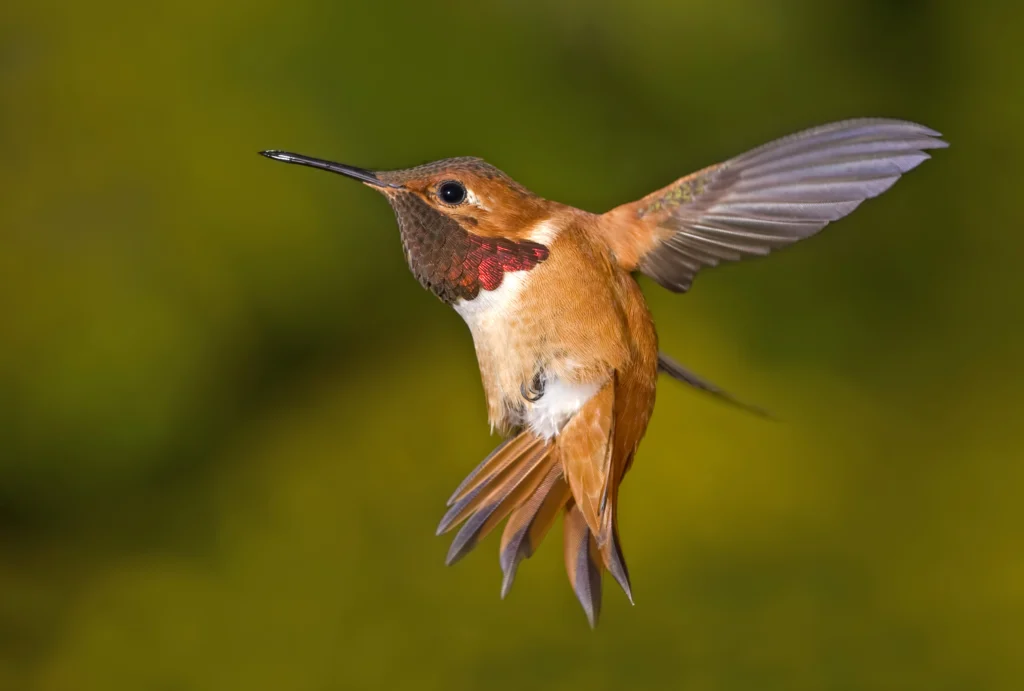
The Western Hemisphere has the distinction of being home to all of the world’s hummingbirds. These tiny, feisty birds are dazzling. From their gem-like plumage to the frenetic buzzing of their rapid wingbeats, everything about hummingbirds captures the imagination.
Throughout the summer months, hummingbirds can be found across almost all of North America. But, these winged wonders are tropical at heart, and most migrate south after the breeding season. Small portions of the United States are graced by the presence of at least one hummingbird species year-round — Anna’s Hummingbirds hang out from season to season along some parts of the West Coast, and a tiny sliver of southern Florida may see Ruby-throated Hummingbirds through the winter, for example. The vast majority of hummingbirds, however, fly to Mexico or Central America for the nonbreeding season.
Though not as long as the journeys of warblers bound for South America, hummingbirds’ travels to Mexico and Central America are still impressive feats for these exceptionally small birds. The Ruby-throated Hummingbird, for example, weighs just a hair more than a penny, but in can make it from the southeastern U.S. to Central America — a 500-mile journey over open water — in under a day.
Like other birds, hummingbirds migrate south in search of flowers, insects, and other food sources. Many make this journey during the late summer and fall, spurred not by hunger or falling temperatures but by decreasing daylight hours.
In late winter and early spring, they return north to breeding grounds in the United States and Canada. Northward migration offers an escape from the tropics, where competition for food can be intense, while providing a seat at the table, so to speak, in the North, where summer food supplies are abundant.
Upon arrival in the United States, Ruby-throated Hummingbirds can travel up to 20 miles a day, typically following their favorite early blooming flowers. Contrary to popular myth, hummingbirds do not migrate on the backs of geese or other birds, although they do sometimes travel in mixed flocks over water.
Learn more about the migratory patterns of several common North American hummingbirds below.
In spring, Ruby-throated Hummingbirds surge northward into the eastern United States and southern Canada, where they breed during the summer months. Some adult Rubythroats begin the journey south as early as mid-July, although most Rubythroats wait until late August or early September to set off. A majority are destined for southern Mexico and Central America, although some will remain in the southern United States along the Atlantic and Gulf Coasts. The Rubythroats that spend the winter on the coasts are typically coming from Canada and have already traversed several thousand miles. Populations of Ruby-throated Hummingbirds are on the rise thanks, in part, to the popularity of backyard feeders and the birds’ ability to live in open and forest-edge habitats.
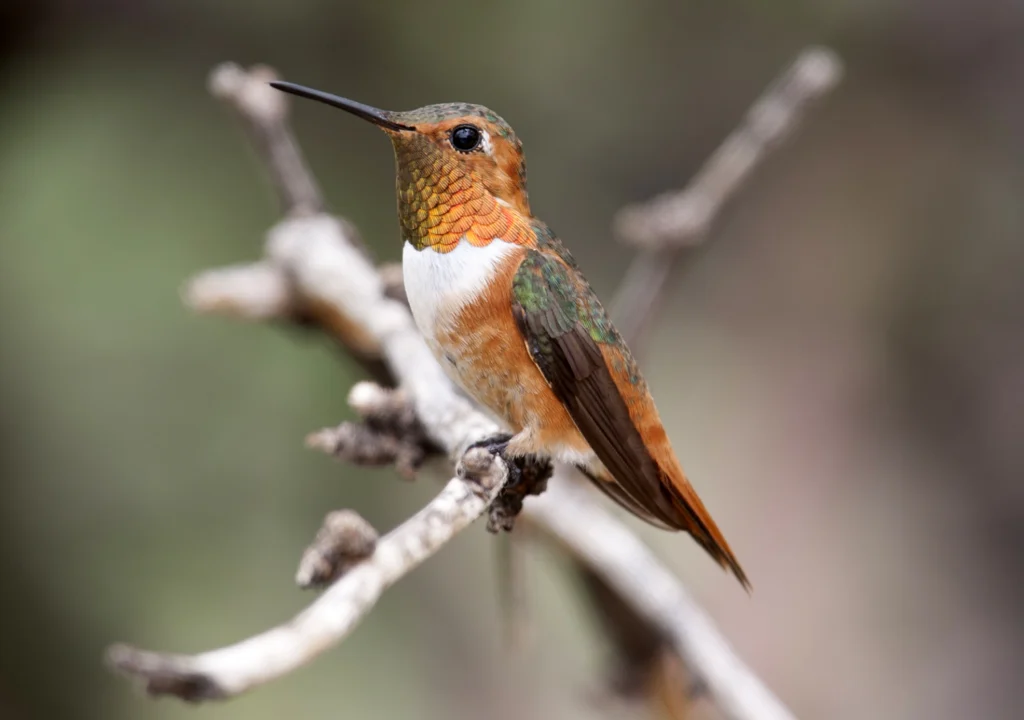
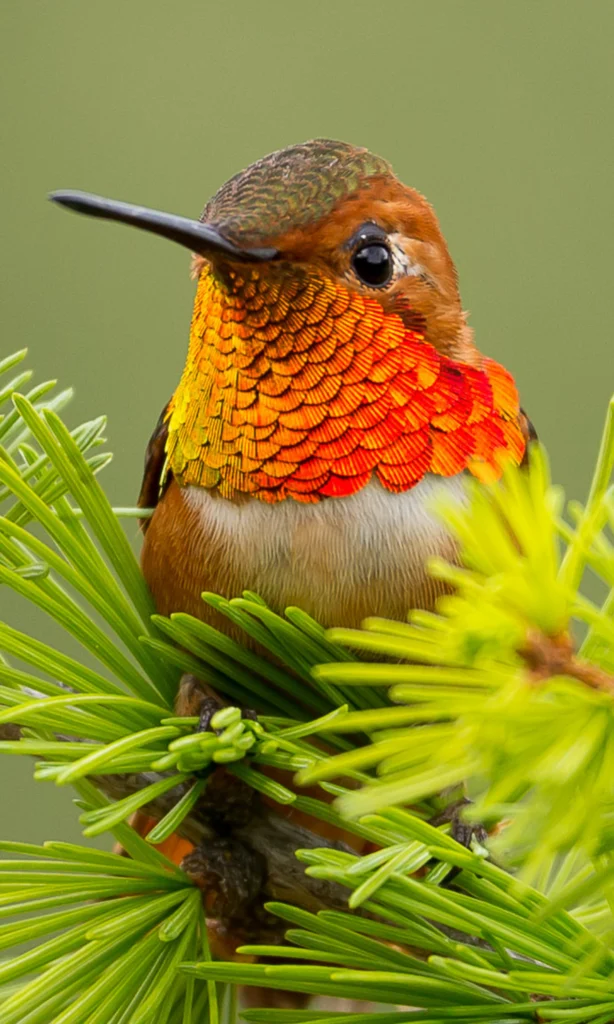
The 3-inch-long Rufous Hummingbird makes one of the longest migratory trips for a bird of its size. Its 3,900-mile journey is roughly equal to the length of 78.4 million Rufous Hummingbirds! (The Arctic Tern’s one-way journey of 11,000 miles, by comparison, is less than 52 million body lengths.) The Rufous Hummingbird’s migration route forms a clockwise loop: The birds leave their nonbreeding grounds in Mexico in early spring, arriving in Washington State and Canada by May via a long flight up the Pacific Coast. After a short breeding season in the north, they head south through the Rocky Mountains. Rufous Hummingbird populations are on the decline due to habitat loss, and this bird is an IUCN Near Threatened species.
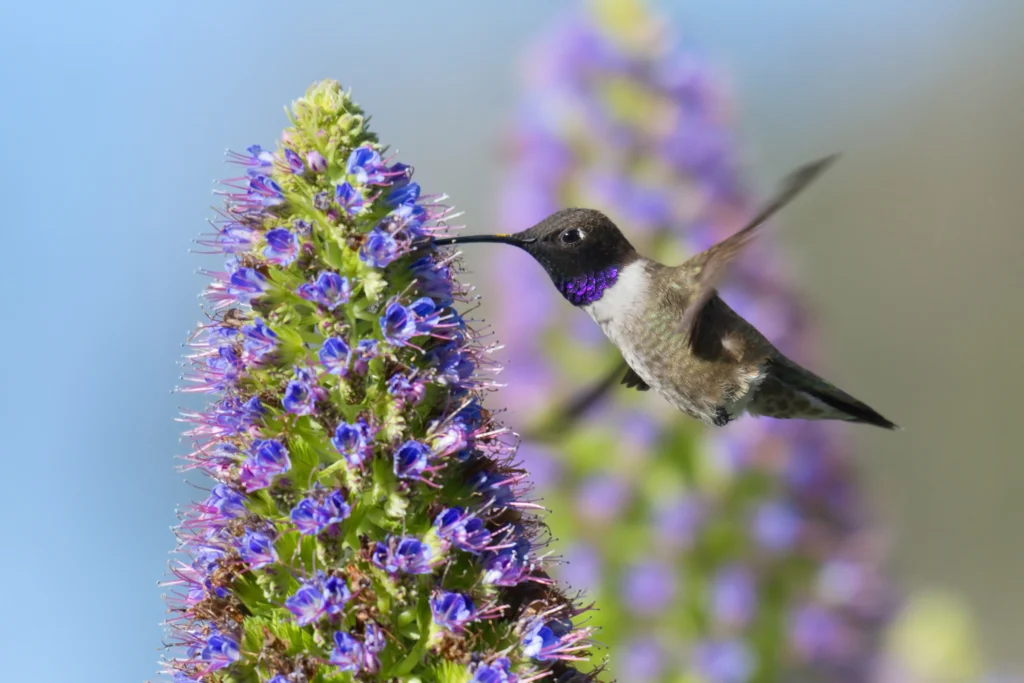
During the summer months, Black-chinned Hummingbirds occupy a large portion of the western United States. This is one of the most adaptable hummers found in the United States, occupying a wide range of habitats, including urban areas. After breeding, many adult birds will move toward higher elevations to feast on mountain flowers, before heading south in the fall. Most will travel to western Mexico, although some overwinter along the Gulf Coast. Populations of Black-chinned Hummingbirds are on the rise, likely due to the popularity of backyard hummingbird feeders and this bird’s tolerance for varied habitats. The Black-chinned Hummingbird is an IUCN species of Least Concern.
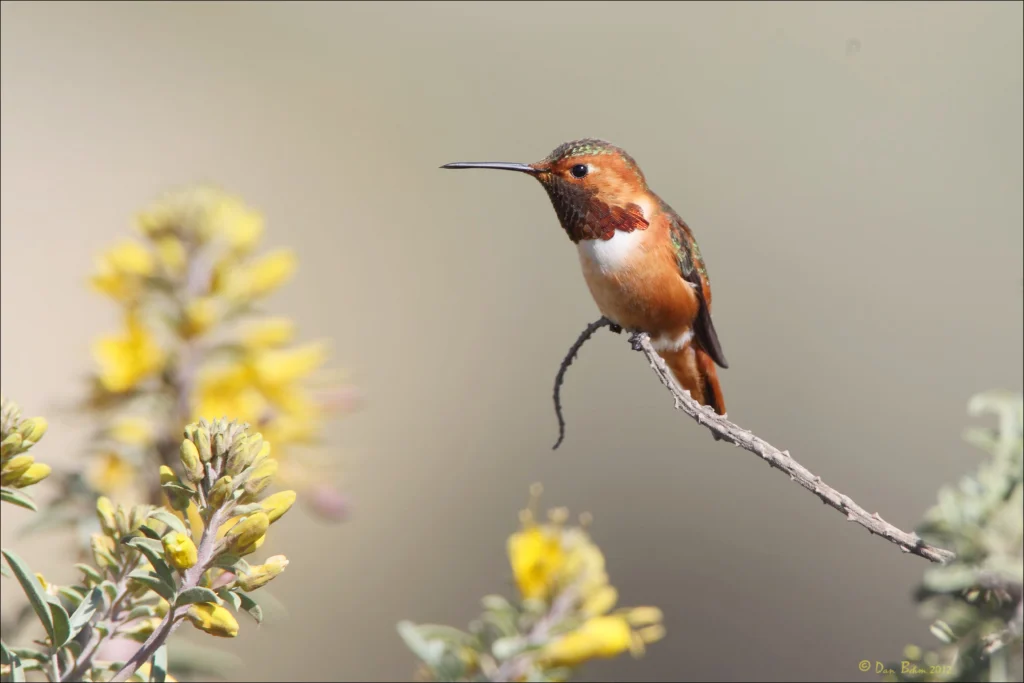
Compared to the springtime departures of other North America-bound migrants, Allen’s Hummingbirds gets the worm. Those that migrate depart their wintering grounds in early December, allowing them to arrive along the coasts of California and Oregon in January — just in time to enjoy the region’s winter wildflowers. During the breeding season, female and male Allen’s Hummingbirds occupy different habitats: Males establish territories within areas of coastal shrub, while females move into forest to build nests. There are two subspecies of Allen’s Hummingbird, each with its own wintering destination. One group (Selasphorus sasin sasin) migrates to central Mexico. The other (S. s. sedentarius) stays in southern California. Although the Allen’s Hummingbird remains fairly common, its numbers have decreased by 83 percent in recent decades, according to Partners in Flight. If trends continue, Partners in Flight estimates that the bird’s current population could be reduced by half in less than 20 years.
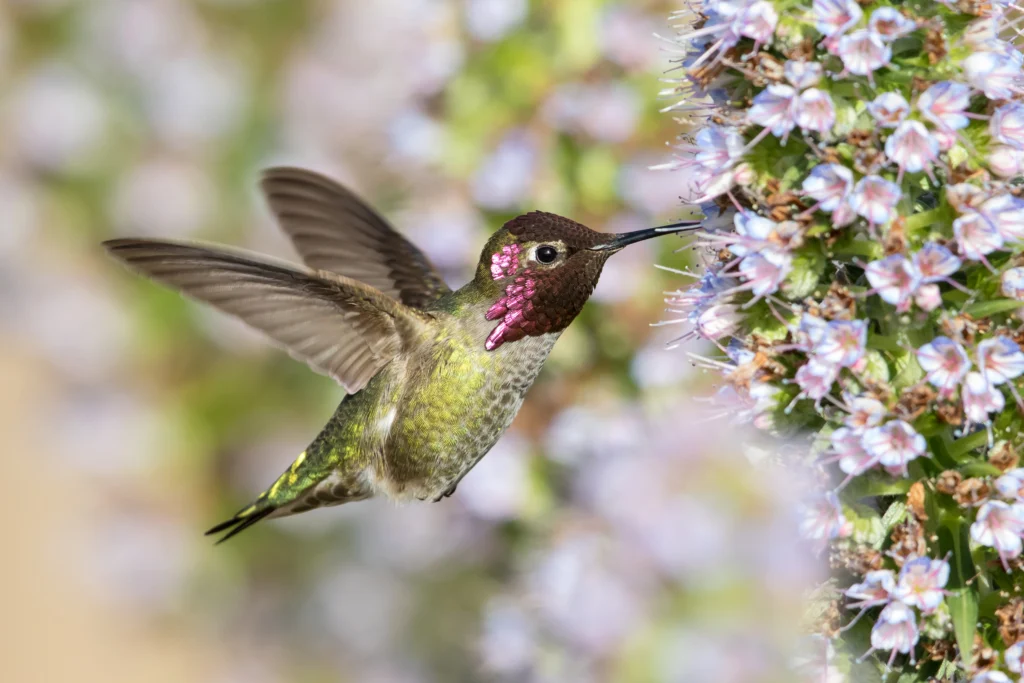
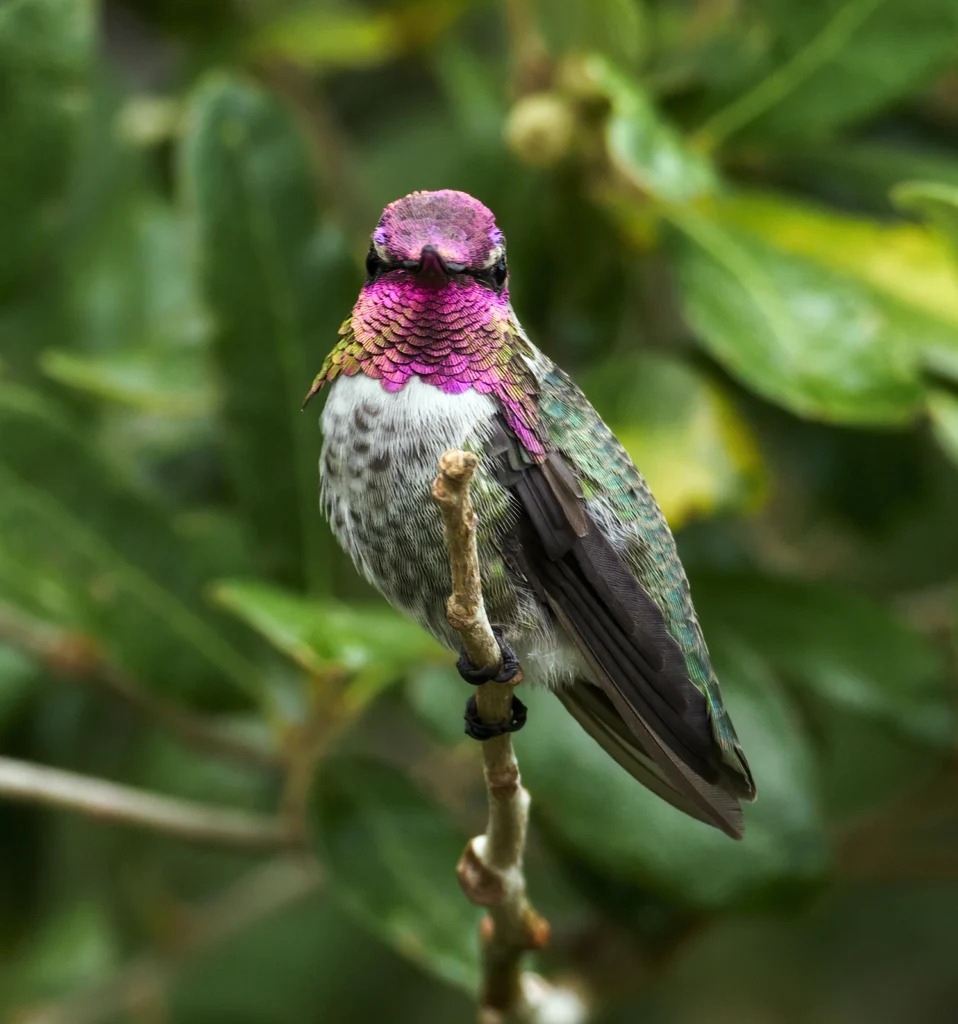
In contrast to most North American hummingbirds, Anna’s Hummingbirds do not migrate, although they will sometimes move short distances to search for additional food sources. Anna’s Hummingbirds now occupy an area of habitat stretching from northern Mexico to Southern Canada, but this wasn’t always the case: During the first part of the 20th century, the bird’s breeding range was much smaller, restricted to Baja, Mexico, and southern California. This changed with the introduction of exotic flowering trees along the West Coast, which provided additional nectar supplies and nesting opportunities. Anna’s Hummingbird populations are also growing thanks to the popularity of backyard hummingbird feeders. This bird is an IUCN species of Least Concern.
Like most land birds, hummingbirds are vulnerable to habitat loss throughout their range. The good news is that we can all do our part to protect hummingbirds.
Policies enacted by Congress and federal agencies, such as the U.S. Fish and Wildlife Service, have a huge impact on America’s birds. You can help shape these rules for the better by telling lawmakers to prioritize birds, bird habitat, and bird-friendly measures. To get started, visit ABC’s Action Center.
You can also create and improve habitat for hummingbirds where you live. Check out our “Hummingbird Paradise” post to learn more. For a complete list of daily activities you can take to help birds, visit our Bird-Friendly Life page.
American Bird Conservancy and our Migratory Bird Joint Venture partners have improved conservation management on 9.9 million acres of U.S. bird habitat over the last ten years. This is a monumental undertaking, requiring the support of many, and you can help by making a gift today.
Related News & Stories


Mi abuelita stood in front of her colorful ofrenda for Día de Muertos. Her long black braid swayed to the rhythm of her favorite song, "El Sirenito," by Rigo Tovar. She sang along as she carefully moved around the jarritos filled with atole, casuelas full of mōlli, and photos of her f...