Budgets, Bills, and Birds
What do the Long-billed Curlew, Canada Warbler, and ‘Akeke‘e have in common? They all benefit from funds coming from the U.S. federal budgeting process.
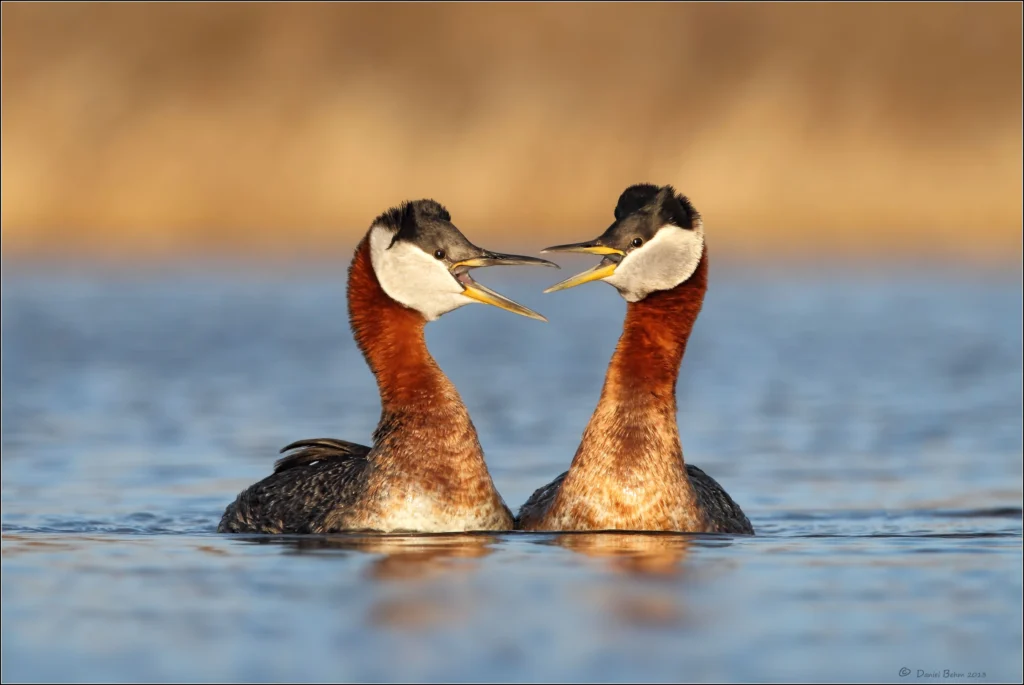
Valentine’s Day is quickly approaching. Do you know what you’re going to get the bird lover in your life? American Bird Conservancy has suggestions for bird-friendly treats to woo your Valentine. And, if all else fails, get inspiration from birds to help you sweep your Valentine off their feet.
Chocolate is the number-one gift given on Valentine’s Day. Chocolate is a sweet treat on its own, but chocolate that’s made the bird-friendly way is even sweeter! In 2021, 17 cocoa farms in the Dominican Republic were the first in the world to be certified as Smithsonian Bird Friendly® cocoa producers by the Smithsonian Migratory Bird Center. The certification guarantees that 100 percent of the cocoa produced by these farms is grown with bird-friendly practices that protect forests and use shade trees beneficial to birds and other wildlife.
If your “tweetheart” has their eye on flowers, why not skip the big bouquet and give a gift that can delight year after year — and help the birds? Native plants are far more beneficial to the environment, providing habitat and food sources that exotic plants can’t deliver for your local birds, butterflies, bees, and other creatures. Plus, with plants native to your region, you don’t run the risk of introducing invasive species into the environment.
Or maybe you want to take your mate on a coffee date? Instead of going out, how about staying in and brewing your own cup of bird-friendly coffee? Shade-grown coffee beans are a tasty alternative to sun-grown coffee. Coffee grown in full sun removes valuable habitat for birds, but shade-grown coffee incorporates native trees that benefit wildlife. We suggest Birds & Beans, which has also earned the Smithsonian Bird Friendly® certification for coffee.
Looking for more inspiration? Birds have you covered. For many species, “romance” doesn’t stop with a sweetly sung song! Many species will go to great lengths (and heights) to impress their mate.
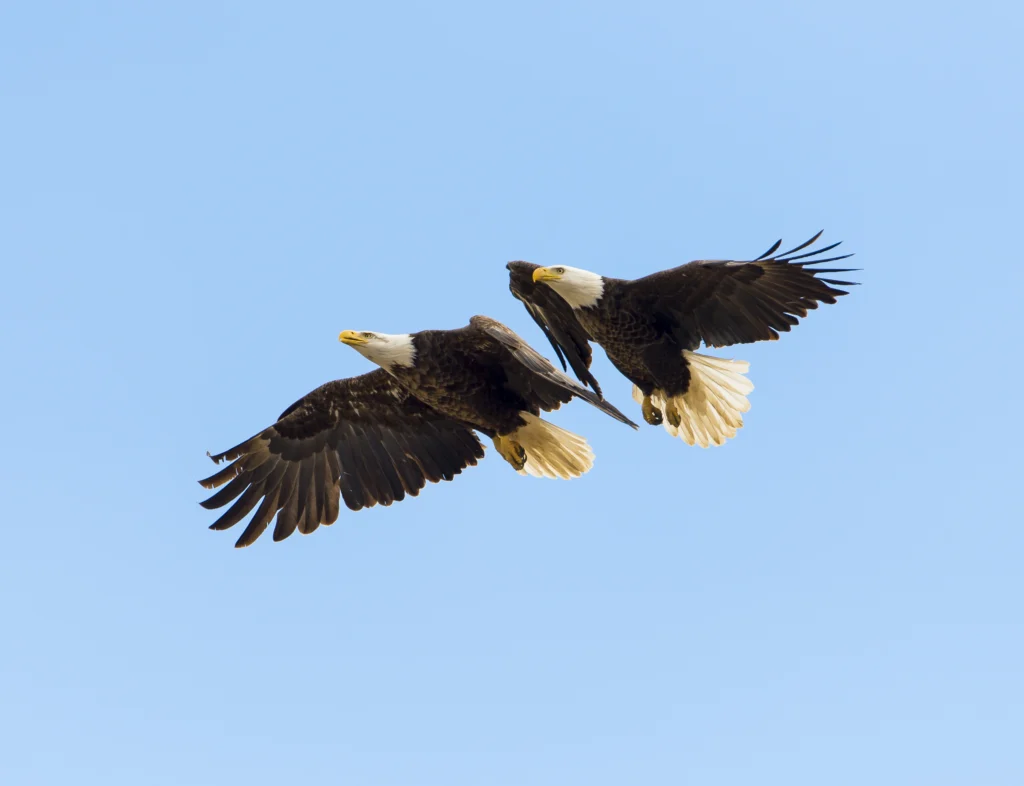
Let’s head out to forest- and marsh-bordered rivers, bays, and lakes, where we can take some sky-diving lessons from courting Bald Eagles. The amazing courtship display these raptors perform is truly a sight to behold. During their courtship, a pair will fly high, link talons, and then plummet toward the ground, spinning wildly. This heartstopping cartwheel display ends only when the pair unlink their talons, seemingly at the last second before impact. Pairs also chase each other, rolling and diving through the air in tandem.
But for all their antics, Bald Eagles are at risk. And this Valentine’s Day, we can show our love for them by considering ways to keep contaminants out of their habitats. The environmental impact of lead might not be the most romantic conversation topic, but it is an important one: Nearly 16 million birds are poisoned by lead annually when they accidentally ingest lead shotgun pellets, ammunition fragments, and fishing sinkers. To help Bald Eagles and other bird species affected by lead poisoning, ABC encourages the hunting and fishing communities to switch to non-lead alternatives. Non-lead options, such as copper, tin, and tungsten, are readily available; the more these products are used, the more affordable and widely accepted they will become.
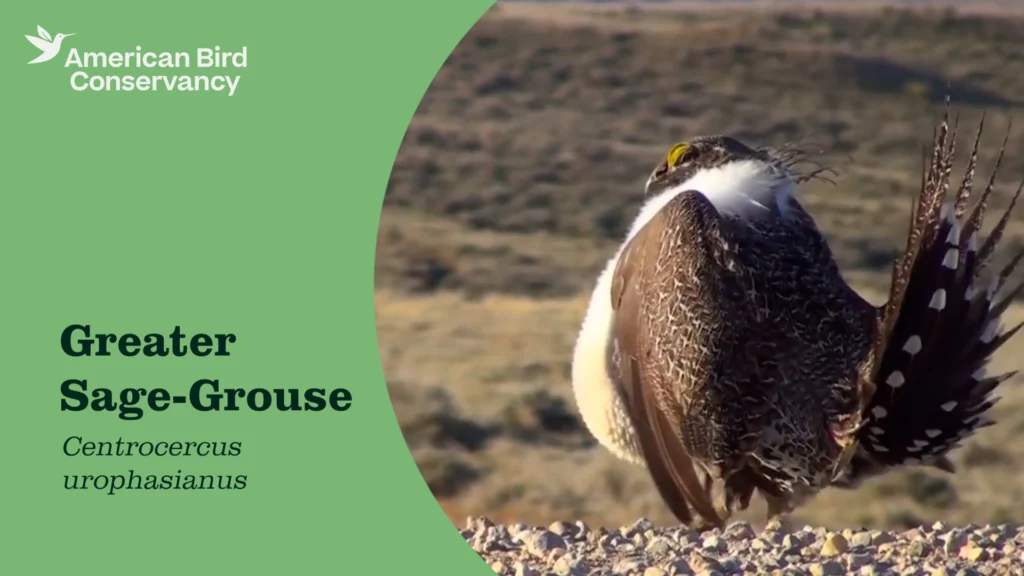
If a breath-taking skydiving performance isn’t your speed, you might take cues from another great performer: the Greater Sage-Grouse. These chunky chicken-like birds of the sagebrush steppe might not seem like showstoppers, but wait until you see them strut their stuff. Male Greater Sage-Grouse come together on their lekking grounds, sites that are used year after year for the purpose of displaying for the females that gather to watch — and listen.
At dawn, males perform intricately choreographed displays. They step forward, gulping air and fanning out their spiky tails. Heads held high and chests puffed out, the males sweep their wings across their fronts to make a swishing sound. Then, they tilt their heads back as they quickly inflate and deflate the yellow pouches on their chests, which make a spectacular popping sound as they bounce. Females watch on for hours as the males strut and perform. For all the off-stage bravado (males are also extremely territorial during the lekking season), females ultimately select their preferred performer as their mate.
As a group, grassland birds have lost about half of their population since the 1970s, and the Greater Sage-Grouse has fared even worse: This spectacular species has declined by approximately 77 percent. Habitat loss and fragmentation of the sagebrush steppe have driven this decline. ABC takes action for the birds that rely on this fragile ecosystem. We advocate for stronger protections for species like the Greater Sage-Grouse and conservation of the habitat they need. Check out ABC’s Action Alerts to learn how you and your sweetie can spread the love for bird-friendly policies.
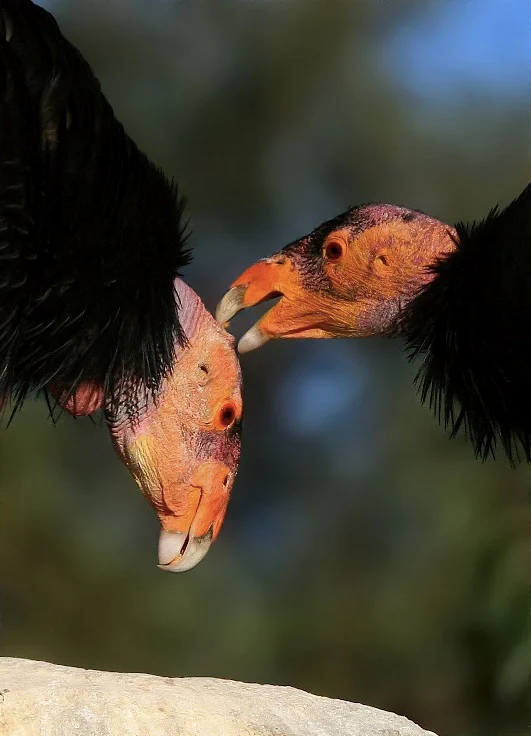
Valentine’s Day is also a celebration of love for those we hold dear, including our family and friends. If you want a model of parental dedication, look no further than one of North America’s largest birds, the California Condor. It takes a lot of carrion to “carry on” as a condor, so these birds range across many miles of hilly forest, desert, and even seashore to get their fill of the flesh of dead animals.
Pairs are usually monogamous, and they are slow breeders, typically raising just one chick every two years. Just like humans raising children, condor chicks require an enormous investment of time, patience, and dedication. Both partners share incubation duties, a commitment that spans almost two months. Once hatched, a chick takes about half a year to fly. It then takes up to 8 years for a condor to reach breeding age. Not all pairings are the same in the condor world: There have been recorded cases of same-sex and “polyamorous” groupings within the species.
Once on the brink of extinction with a population of just 22 birds in 1987, the California Condor is making a slow but steady comeback thanks to breeding in human care. Reintroduced birds bred in captivity are slowly rebuilding the condor’s wild population. There are now free-flying reintroduced populations in California, Arizona, Utah, and Baja California, Mexico, some of which have been released on Yurok Tribe territory, including the Redwoods National Park in Northern California. Although their population has risen from about two dozen in the 1980s to several hundred free-flying birds today, as with eagles, condors face the danger of lead poisoning when they settle down to feed on carcasses that contain lead shot.

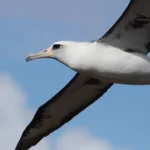
The Laysan Albatross may not get married in the human sense, but you’d be hard-pressed to find a better icon of commitment. Most albatrosses mate for life, despite extremely long commutes that can put extreme distances between mates during the nonbreeding season. They’re in it for the long haul, too: Laysan Albatrosses are exceptionally long-lived animals. In fact, the oldest known wild bird in the world, Wisdom the Laysan Albatross, was first banded by researchers in 1956 and returned to her breeding grounds in 2025 for another nesting season.
An inspiring flyer, this bird can glide over the open ocean for hours at a time without a single flap of its long, narrow wings, sailing hundreds of miles a day on an impressive 6-foot wingspan. When it comes time to breed, these birds return from the high seas to sandy, grassy islands and set to nesting. But first, after all the time apart, they make space for bonding through ritualized dancing displays that include bowing, stretching, strutting, clapping and rubbing bills, calling, and raising one wing. Pairs also practice allopreening, or mutual grooming, which helps to reinforce their bond.
These long-distance flyers face many dangers, from getting caught in fishing lines as bycatch and drowning, to invasive predators, to the flooding of their nesting grounds due to climate change. You can find out more about how ABC is combating these threats through our Marine Program!
If you’re still stuck figuring out a Valentine’s Day gift for your loved one, consider gifting them an ABC Membership. This gift will bring incredible bird stories straight to their mailbox with a subscription to Bird Conservation, ABC’s Member magazine. They’ll also enjoy engaging updates on the birds they love, insights into ABC’s conservation efforts, and the benefit of knowing that they’re supporting the conservation of native birds and their habitats across the Americas.
Related News & Stories